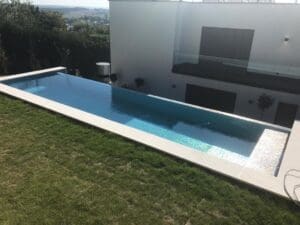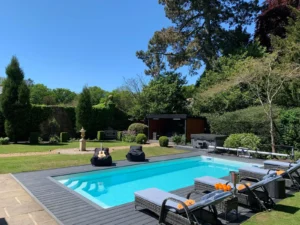

In many cases, you do NOT need planning permission to install a private swimming pool in your garden, as long as it meets certain criteria under Permitted Development Rights.
You can usually build a pool without planning permission if:
- ✅ The pool is for private domestic use
- ✅ It is located within your garden boundary
- ✅ It does not exceed height or coverage limits
- ✅ It is not on designated or protected land
However, planning permission IS required in the following situations:
- ❌ You live in a listed building
- ❌ Your property is in a conservation area, national park, or Area of Outstanding Natural Beauty
- ❌ The pool requires a large permanent structure or enclosure
- ❌ The pool significantly alters the landscape or drainage
- ❌ A new building is needed for an indoor pool
If you are unsure, it’s always best to check with your local council planning department before starting work.
Planning Permission for Indoor & Enclosed Pools
Indoor and enclosed pools are more likely to require approval because they often involve:
- Building extensions
- Structural enclosures
- Roofing systems
- Permanent walls and glazing
If your project includes a:
- Purpose-built pool house
- Large glass enclosure
- Retractable roof structure
- Garden building conversion
Then planning permission is very likely to be required.
UK Pool Regulations You Must Follow
Even if planning permission is not required, your pool must still comply with UK building regulations and safety standards.
Building Regulations Approval
Building Regulations apply to:
- Structural works
- Drainage systems
- Electrical installations
- Indoor ventilation systems
Any structural pool work must meet regulations for:
- Load-bearing structures
- Ground stability
- Moisture and damp protection
- Safe electrical wiring
A qualified installer will normally handle this on your behalf.
Drainage & Water Disposal Rules
You cannot legally discharge pool water into public drains without permission. Pool water must be:
- Safely dispersed into soakaways
- Discharged in compliance with local drainage rules
- Chemically neutralised before release
Incorrect water disposal can result in fines or environmental penalties.
Electrical Safety Regulations
All electrical components must comply with:
- UK Electrical Safety Regulations (BS 7671)
- Installed by a Part P certified electrician
This includes:
- Pool lighting
- Pumps
- Heaters
- Control panels
Fencing & Safety Rules for Private Pools
While the UK does not currently have nationwide mandatory fencing laws for private pools (unlike some countries), homeowners still have a legal duty of care.
Best practice safety measures include:
- ✅ Lockable safety covers
- ✅ Pool fencing or enclosures
- ✅ Self-closing gates
- ✅ Pool alarms
- ✅ Non-slip surfaces
- ✅ Rescue equipment nearby
If a guest or child is injured due to negligence, homeowners may be legally liable even without specific fencing laws.
Do You Need Special Insurance for a Private Pool?
Yes, and this is often overlooked.
You should:
- ✅ Inform your home insurance provider
- ✅ Update your buildings and public liability cover
- ✅ Extend cover for:
- Drowning risk
- Injury claims
- Structural damage
- Electrical faults
Failure to declare your swimming pool could invalidate your insurance policy.
Noise, Neighbours & Legal Boundaries
Swimming pools can create:
- Pump noise
- Party noise
- Lighting disturbances
To avoid legal disputes:
- Keep pumps away from boundary lines
- Use sound-insulated equipment
- Limit late-night use
- Avoid overspill lighting into neighbouring gardens
Your pool must also remain within your legal boundary, and excavation must not affect neighbouring foundations.
Special Rules for New Builds & Commercial Use
If your pool is:
- Part of a new housing development
- Used for holiday rentals or Airbnbs
- Open for paid or public use
Then:
- ✅ Stricter regulations apply
- ✅ Commercial health & safety laws may be required
- ✅ Local authority inspections may be needed
What Happens If You Build a Pool Without Permission?
If you install a pool illegally, councils can:
- Issue an enforcement notice
- Demand removal of the pool
- Apply legal penalties
- Block future property sales
This is why it’s essential to confirm planning rules before starting construction.
Quick Legal Checklist for UK Pool Owners
✅ Check local planning permission status
✅ Confirm whether your land is protected
✅ Comply with building regulations
✅ Install certified electrical systems
✅ Provide safety covers or fencing
✅ Update home insurance
✅ Follow drainage and water disposal rules
Final Thoughts: Is Planning Permission a Barrier?
In most standard garden pool installations, planning permission is not a major obstacle. However, indoor pools, enclosures, listed buildings and protected areas require careful legal checks before proceeding.
By handling permissions early and working with experienced professionals, you can move forward with confidence and avoid costly legal issues later.
Thinking About Installing a Pool?
At My Pool Direct, we guide homeowners through:
- Pool design
- Installation
- Planning guidance
- Enclosures and heating solutions
👉 Contact our expert team today for advice tailored to your property.